

What Are The Aluminum Alloys For Shipbuilding?
The modern shipbuilding industry is comprehensively promoting lightweighting, energy conservation, and high durability upgrades. Compared to traditional steel, aluminum alloys for shipbuilding possess core advantages such as low density, resistance to marine corrosion, excellent weldability, and low maintenance costs. They are now widely used in the manufacture of civilian ships, engineering vessels, yachts, and offshore platform structures. Currently, the most commercially mature aluminum alloys in shipbuilding are mainly divided into two categories: 5xxx series aluminum-magnesium rust-resistant aluminum alloys and 6xxx series aluminum-magnesium-silicon high-strength aluminum alloys. These different aluminum alloys have significantly different compositions and mechanical properties, precisely adapting to different working conditions and structural parts of ships.
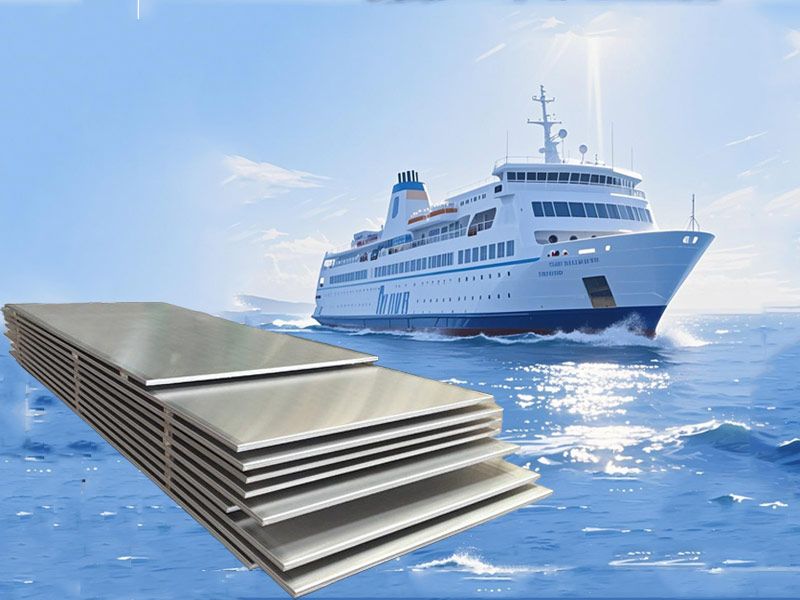
5xxx series aluminum-magnesium alloys are the core material in the shipbuilding industry. Belonging to the rust-resistant aluminum alloy category, with magnesium as the main alloying element, they can resist marine salt spray and seawater chloride ion corrosion without complex surface treatment. They also possess excellent weldability and low-temperature toughness, making them suitable for the main structures of most ships.
It is a core high-end marine alloy, characterized by high magnesium content, stable grain structure, and outstanding resistance to exfoliation corrosion and stress cracking. It can withstand harsh, high-salt, and high-humidity seas in the open ocean, and its mechanical properties do not diminish at low temperatures. It is mainly used for the hull outer shell, deck, bulkheads, and load-bearing structures of large ships and offshore engineering platforms, and is a mainstream marine material certified by international classification societies.
- 5086 aluminum alloy:
It offers balanced overall performance, moderate strength, excellent fatigue resistance, and better formability. It is suitable for components requiring bending and shaping, such as ship superstructures, hatch covers, and side plating. It is widely used in cruise ships and high-end yachts, balancing lightweight design with structural stability.
- 5754 aluminum alloy:
It is an economical marine aluminum material, with stable corrosion resistance and weldability, offering significant cost-effectiveness. It is mainly suitable for fishing boats, small sightseeing boats, inland waterway vessels, and offshore platform auxiliary structures.
It has excellent plasticity and is easy to stamp and form, and is often used for lightweight auxiliary structures such as gangways, window frames, and decorative supports on small ships.
6xxx series aluminum-magnesium-silicon alloys are heat-treatable aluminum alloys, with magnesium and silicon as alloying elements. The representative model is 6061 aluminum alloy. The biggest advantages of this category are high strength, high dimensional accuracy, excellent machinability, and extremely strong structural stability, compensating for the shortcomings of 5xxx series aluminum alloys in high-strength load-bearing capacity. They are mainly used in precision structural components with stringent requirements for strength, flatness, and stability, such as ship masts, navigation equipment brackets, precision load-bearing parts, and mechanical bases, making them core materials for functional ship components.
Marine grade aluminum alloys are special industrial materials with extremely high thresholds for composition ratios, rolling processes, corrosion resistance indicators, and compliance certifications. Haomei Aluminum focuses on mass production of a full range of standard shipbuilding-specific aluminum plates, covering all categories of marine alloys including 5052, 5083, 5086, 5754, 5059, 5383 and 6061. Our marine grade aluminum products strictly adhere to international marine material standards, are certified by six major classification societies including DNV, ABS, and CCS, and undergo rigorous control over impurity content and grain refinement throughout the entire process. They have passed thousands of hours of salt spray corrosion testing, are suitable for all marine operating conditions, and can provide standardized plates and customized size solutions for shipyards both domestically and internationally.
The selection aluminum alloys for shipbuilding follows the core logic of "5xxx series focusing on corrosion-resistant structures and 6xxx series focusing on precision load-bearing." The rational combination of different aluminum alloy materials can significantly reduce ship weight and fuel consumption, while effectively extending ship lifespan and reducing maintenance costs, making them an indispensable core material for modern intelligent shipbuilding.
 |

Haomei Aluminum CO., LTD.

|

|
Company name: Haomei Aluminum CO., LTD.. Tel : +86-18137889531 Whatsapp : +86-18137889531 E-mail : nydia@aluminumhm.com