

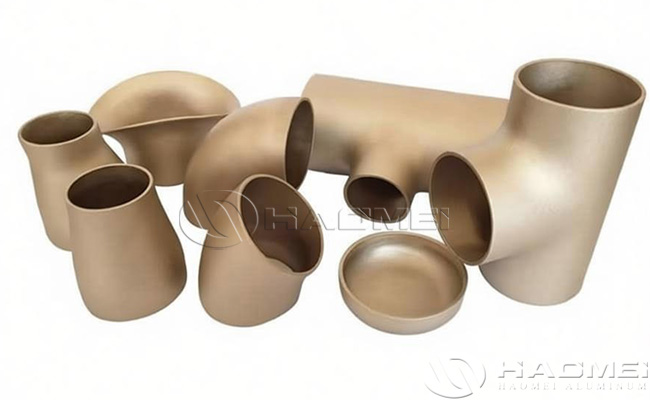


Copper Nickel Pipe Fittings | CuNi Elbows, Tees, Reducers & Flanges
- Material: C70600, C71500, CuNi10Fe1Mn, CuNi30Mn1Fe
- Product Type: Elbow, tee, reducer, flange, cap, stub end, coupling, union, custom fitting
- Connection Type: Butt welding, socket welding, threaded, flanged or custom connection
- Angle: 45°, 90°, 180° or customized
- Radius: Long radius, short radius or custom radius
- Surface: Pickled, cleaned, polished or as required
- Introduction
- Feature
- Application
- Pictures
- Video
- Download
Copper nickel pipe fittings, also known as CuNi pipe fittings or cupronickel fittings, are essential components for connecting, changing direction, branching, reducing size and terminating copper nickel piping systems. They are commonly used together with copper nickel pipes in marine and offshore applications.
Due to the special alloy composition of copper, nickel, iron and manganese, copper nickel fittings offer excellent corrosion resistance in seawater environments. They are especially suitable for shipbuilding piping systems, offshore engineering, desalination plants, condensers, cooling systems and other seawater service applications.
We supply a complete range of copper nickel pipe fittings, including elbows, tees, reducers, flanges, caps, stub ends, couplings and custom fabricated fittings. Available materials include 90/10 copper nickel C70600 / CuNi10Fe1Mn and 70/30 copper nickel C71500 / CuNi30Mn1Fe. Products can be supplied according to ASTM, ASME, DIN, EN, EEMUA and customer drawings.

Available Copper Nickel Pipe Fittings
We supply a wide range of copper nickel pipe fittings for complete marine piping solutions.
| Product | Description |
|---|---|
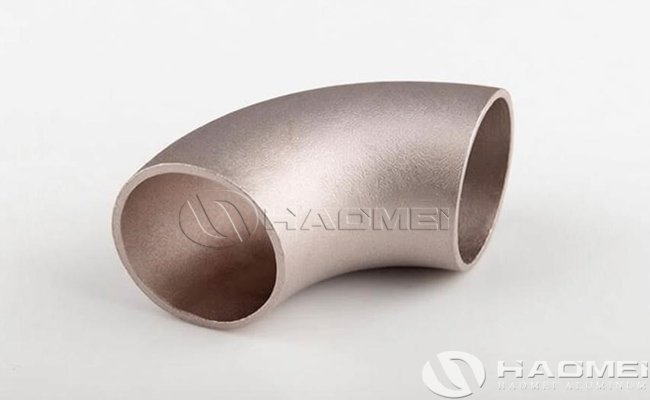
| Copper Nickel Elbow | 45°, 90°, 180°, long radius and short radius elbows for changing pipe direction |
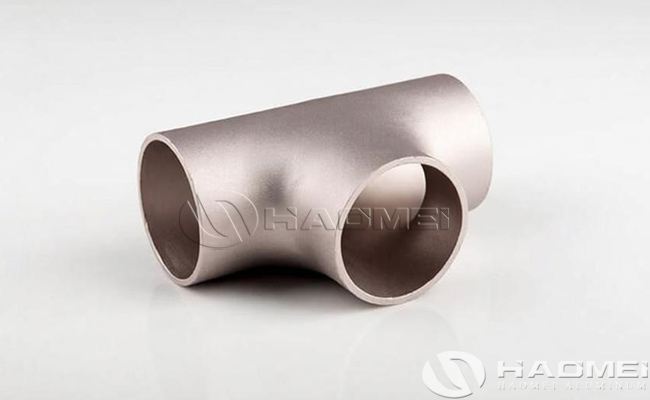
| Copper Nickel Tee | Equal tee and reducing tee for branch connections |
| Copper Nickel Reducer | Concentric reducer and eccentric reducer for pipe size transition |
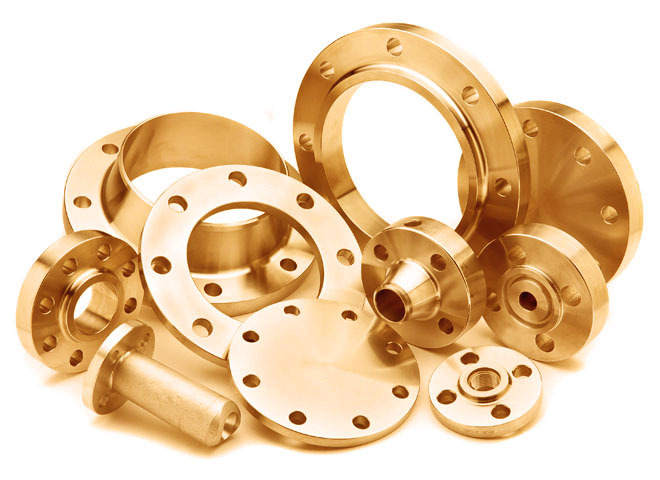
| Copper Nickel Flange | Welding neck, slip-on, loose, blind and custom flanges |
| Copper Nickel Cap | Used for pipe end closure |
| Copper Nickel Stub End | Used with loose flanges for flanged connections |
| Copper Nickel Coupling | Used for joining two pipes or pipe sections |
| Copper Nickel Union | Detachable connection for maintenance and installation |
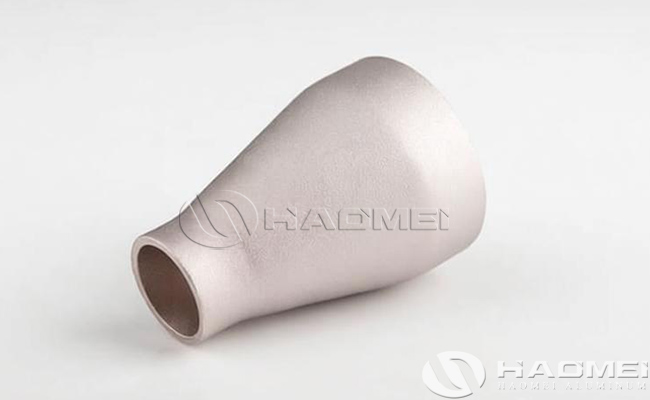
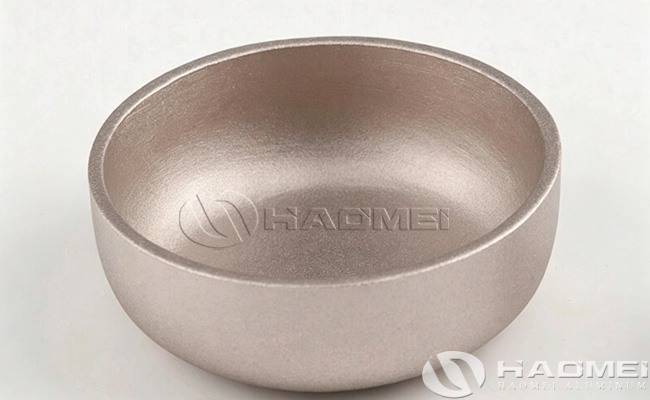
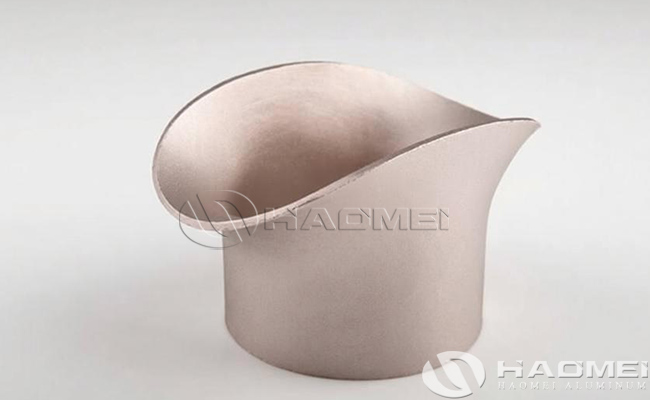
Common Material Grades of Copper Nickel Pipe Fittings
| Alloy | UNS Grade | European / Common Grade | Typical Application |
|---|---|---|---|
| 90/10 Copper Nickel | C70600 | CuNi10Fe1Mn | General marine seawater piping systems |
| 70/30 Copper Nickel | C71500 | CuNi30Mn1Fe | More demanding seawater service and higher strength applications |
| 90/10 CuNi | C70620 / equivalent | Project specified grade | Shipbuilding and offshore piping |
| 70/30 CuNi | C71520 / equivalent | Project specified grade | Severe marine service and heat exchanger systems |
Functions of Copper Nickel Pipe Fittings
Copper nickel pipe fittings are used for different functions in a piping system. Selecting the correct fitting type is important for safe installation and long-term operation.
| Fitting Type | Main Function |
|---|---|
| Elbow | Changes the direction of the pipeline |
| Tee | Creates a branch connection |
| Reducer | Connects pipes of different diameters |
| Flange | Connects pipes to valves, pumps, equipment or other flanged parts |
| Cap | Closes the end of a pipe |
| Stub End | Used with loose flange for detachable flange connection |
| Coupling | Connects two pipes in a straight line |
| Union | Provides removable connection for maintenance |
| Custom Fitting | Used for special layouts or project-specific piping design |
Standards of Copper Nickel Pipe Fittings
Our copper nickel pipe fittings can be supplied according to international standards, marine project specifications or customer drawings.
Common standards include:
ASTM B151
ASTM B466
ASTM B467
ASME B16.9
ASME B16.5
ASME B16.11
DIN 86087
DIN 86088
DIN 86089
DIN 86090
EEMUA 145
EN 12420
EN 12449
Customer drawings and project specifications
General Supply Range
| Item | Supply Range |
|---|---|
| Material | C70600, C71500, CuNi10Fe1Mn, CuNi30Mn1Fe |
| Product Type | Elbow, tee, reducer, flange, cap, stub end, coupling, union, custom fitting |
| Size | Standard sizes or customized according to drawings |
| Wall Thickness | According to pipe size, standard or project requirement |
| Connection Type | Butt welding, socket welding, threaded, flanged or custom connection |
| Angle | 45°, 90°, 180° or customized |
| Radius | Long radius, short radius or custom radius |
| Surface | Pickled, cleaned, polished or as required |
| Processing | Cutting, forming, welding, machining, flanging, fabrication |
| Packaging | Wooden case, wooden pallet, carton, export seaworthy packing |


Production Process by Fitting Type
Copper nickel elbows are usually produced by hot forming, cold forming or welded fabrication. After forming, the elbows are heat treated, calibrated, cleaned and inspected.
Flow Chart:
Raw Material Inspection → Cutting → Forming → Heat Treatment → Calibration → End Beveling → Surface Cleaning → Inspection → Marking → Packaging

Copper nickel tees can be produced by hydraulic forming, hot forming, welding or fabrication according to the size and project requirement.
Flow Chart:
Raw Material Inspection → Cutting → Forming / Welding → Heat Treatment → Sizing → End Processing → Cleaning → Inspection → Packaging

Copper nickel reducers are produced by forming or fabrication. Concentric reducers and eccentric reducers are available for different piping layouts.
Flow Chart:
Raw Material Inspection → Cutting → Forming → Heat Treatment → Sizing → End Processing → Inspection → Packaging
Copper nickel flanges are generally produced from forged blanks, plates or bars through machining. Bolt holes, sealing faces and connection ends are machined according to the required standard.
Flow Chart:
Material Inspection → Forging / Cutting → Heat Treatment → CNC Machining → Drilling → Surface Finishing → Inspection → Marking → Packaging
Quality Control and Inspection
To ensure reliable service in marine and offshore environments, copper nickel pipe fittings can be inspected and tested according to customer requirements and applicable standards.
Available inspections include:
Chemical composition analysis
Mechanical property test
Visual inspection
Dimensional inspection
Wall thickness inspection
Angle and radius inspection for elbows
Weld inspection for welded fittings
PMI material verification
Hydrostatic test
Dye penetrant test
Ultrasonic test
Radiographic test, if required
Material test certificate
Third-party inspection report
Classification society inspection, if required

Packaging and Delivery
Copper nickel pipe fittings are packed carefully to prevent damage, deformation, scratching and contamination during transportation. Standard packaging includes wooden cases, wooden pallets, cartons, plastic wrapping and export seaworthy packing.
For machined flanges, sealing faces and finished surfaces can be protected with plastic caps, foam, paper, oil protection or individual wrapping according to customer requirements.

Request a Quote for Copper Nickel Pipe Fittings
Please send us your required fitting type, material grade, size, wall thickness, standard, quantity and drawing if available. Our team will provide a fast quotation and technical support for your marine copper nickel pipe fitting project.
Features of Copper Nickel Pipe Fittings:
Excellent resistance to seawater corrosion
Good resistance to erosion corrosion
Natural resistance to marine biofouling
Reliable connection performance in marine piping systems
Good weldability and fabrication properties
Suitable for long-term seawater service
Available in 90/10 and 70/30 copper nickel alloys
Can be supplied with copper nickel pipes as complete piping packages
Custom sizes and drawings are available
Suitable for shipbuilding, offshore, desalination and heat exchanger systems

Applications of Copper Nickel Pipe Fittings:
Copper nickel pipe fittings are widely used in:
Shipbuilding piping systems
Marine seawater cooling systems
Fire fighting water systems
Ballast water systems
Bilge water systems
Deck wash systems
Offshore platform piping
Desalination plants
Heat exchangers and condensers
Coastal power plants
Seawater intake and discharge lines
Oil and gas marine piping systems
LNG carriers, tankers, bulk carriers, container ships and special vessels



 |

Haomei Aluminum CO., LTD.

|

|
Company name: Haomei Aluminum CO., LTD.. Tel : +86-18137889531 Whatsapp : +86-18137889531 E-mail : nydia@aluminumhm.com