

Marine Grade Corrosion Resistant Aluminum Alloys
The strong penetrating power of chloride ions, continuous salt spray deposition, and alternating wet and dry seawater immersion in marine environments can trigger four typical failure types in materials: pitting corrosion, intergranular corrosion, exfoliation corrosion, and stress corrosion cracking. These directly determine the service life and safety threshold of ship structures. In marine structural materials systems, marine grade corrosion resistant aluminum alloys, with their inherent passivation capabilities and lightweight characteristics, have become a core solution to replace carbon steel. Among them, 5000 series aluminum-magnesium rust-resistant alloys are currently the most widely used and most mature marine-grade alloy system in terms of corrosion resistance, covering all scenarios from ocean-going vessels to near-shore equipment for corrosion protection.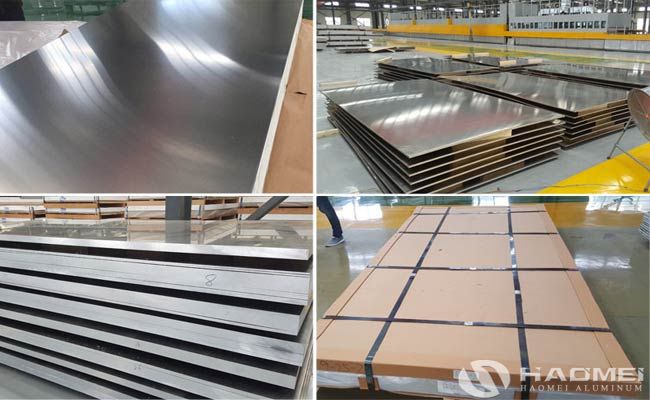
From the perspective of the classification of marine grade corrosion resistant aluminum alloys, the industry mainstream can be divided into two major systems: 5000 series aluminum-magnesium non-heat-treatable strengthened alloys and 6000 series aluminum-magnesium-silicon heat-treatable strengthened alloys. 6000 series aluminum alloys are characterized by high strength and precision, with moderate corrosion resistance, and are often used in precision load-bearing structures of ships after surface treatment. 5000 series marine grade aluminum alloys, relying on the alloying effect of magnesium, possess inherent corrosion resistance in marine environments and are the sole primary choice for corrosion protection of ship hulls. Different grades within the 5000 series aluminum alloys form a clear hierarchy of corrosion resistance levels based on differences in magnesium content and heat treatment conditions, suitable for varying degrees of marine operating conditions.
5083-H116 is the highest grade of marine corrosion-resistant aluminum alloy, fully compliant with ASTM B928 marine aluminum plate standards, and is the flagship grade suitable for long-term direct immersion in seawater. Its magnesium content is controlled between 4.0% and 4.9%, supplemented with manganese and chromium to refine the grains. Through a special temperature-controlled rolling process, the grain boundary β phase (Mg₂Al₃) is regulated into a discrete distribution, blocking intergranular corrosion channels at the metallurgical level. 5086-H116 achieves a PB rating or higher in ASTM G66 exfoliation corrosion testing, shows no significant pitting or delamination in 1000-hour salt spray tests, and exhibits excellent resistance to stress corrosion cracking. Its toughness does not diminish at low temperatures, making it ideal for demanding corrosion-resistant applications such as ocean-going vessel hulls, open decks, and main structures of offshore engineering platforms.
5086-H116 is a balanced corrosion-resistant marine alloy with a magnesium content of 3.5%~4.5%. While its exfoliation corrosion resistance is slightly lower than 5083 aluminum, its fatigue corrosion resistance is outstanding. Under alternating wave impacts and periodic vibrations, it is less prone to corrosion propagation due to fatigue microcracks and offers superior cold-forming properties. It is widely used in ship superstructures, hatch coamings, and side plating—structures requiring bending—and is a mainstream choice for ro-ro passenger ships and luxury yachts.
5754-H24 and 5052-H32 constitute the corrosion-resistant echelon for medium-to-low operating conditions. 5754 aluminum alloy has a moderate magnesium content, resulting in minimal corrosion resistance degradation in the weld area. No additional anti-corrosion coating is required after welding, offering significant cost-effectiveness advantages. It is suitable for near-shore fishing vessels, inland waterway vessels, and platform railings. 5052 aluminum alloy exhibits excellent plasticity and stable resistance to marine atmospheric corrosion, primarily used for cabin interior trim, porthole frames, decorative supports, and other areas not directly exposed to seawater.
From a corrosion resistance mechanism perspective, the corrosion resistance of 5000 series marine grade aluminum alloys stems from the spontaneous formation of a dense Al₂O₃ passivation film on the surface. The solid solution of magnesium further enhances the self-healing properties of this film, allowing for rapid oxidation repair of minor scratches. Combined with specialized heat treatment to control the size and distribution of the β phase, it simultaneously avoids the risks of intergranular corrosion and exfoliation corrosion, achieving a long-term balance between mechanical properties and corrosion resistance.
Haomei Aluminum's full range of 5000 series marine grade aluminum plates strictly adheres to international classification society standards. Each batch undergoes specialized testing for intergranular corrosion and exfoliation corrosion. Holding certifications from six major classification societies, including DNV, ABS, CCS, BV, RINA and KR, Haomei Aluminum can provide customized sizes with different corrosion resistance levels, offering stable and reliable anti-corrosion and lightweight material support for global shipbuilding and offshore engineering projects.
 |

Haomei Aluminum CO., LTD.

|

|
Company name: Haomei Aluminum CO., LTD.. Tel : +86-18137889531 Whatsapp : +86-18137889531 E-mail : nydia@aluminumhm.com