
How to Choose Reliable Copper-Nickel Pipe Fitting Supplier?
The long-term operational reliability of seawater piping systems in marine engineering and shipbuilding depends heavily on the material stability and machining precision of copper nickel pipe fittings. Substandard fittings are prone to issues such as corrosion-induced perforation or excessive wall-thinning when exposed to seawater, which can lead to leaks and costly unplanned downtime. To mitigate project risks at the source, evaluate potential copper nickel pipe fittings suppliers based on four key criteria: material control, process quality assurance, regulatory compliance, and supply/delivery capabilities.
Precise control over material composition is the fundamental prerequisite for selection. The corrosion resistance of copper-nickel pipe fittings is determined directly by their alloy composition. For C70600 (90/10) fittings, strict adherence to specifications is required - typically 9.0%–11.0% nickel, 1.0%–1.8% iron, ≤1.0% manganese, and ≤0.05% lead - to ensure a dense, protective passivation film and high resistance to erosion. A reliable copper nickel fittings supplier should possess in-house spectral analysis capabilities, providing a composition report for every heat of raw material. This ensures consistency between the fittings and the associated piping, preventing electrochemical corrosion and reduced corrosion resistance caused by compositional deviations. Based on extensive industry experience, it is noted that some low-cost suppliers may claim their products are 90/10 copper-nickel alloy while actually reducing the nickel content. Although such discrepancies are difficult to detect by visual inspection, the actual service life of the components can be reduced by more than 40%. Therefore, it is essential to explicitly require that a material composition test report be provided with every shipment.
The forming process and quality control system are the primary determinants of long-term product reliability. The pressure-bearing capacity and erosion resistance of copper-nickel pipe fittings depend on the forming techniques employed and the precision of wall-thickness control. For instance, elbows should be manufactured using a medium-frequency hot-push process, while tees should be produced via hydraulic bulging combined with hot-pressing reinforcement. These methods ensure a continuous and intact metal grain flow, keeping wall-thickness reduction in critical areas to within 10% - thereby meeting the requirements of the ASME B16.9 dimensional standard. Factory inspection must include three mandatory procedures: dimensional tolerance checks, liquid penetrant testing, and hydrostatic testing. For products intended for high-pressure applications, additional testing - such as eddy-current inspection and intergranular corrosion testing - should be performed. A robust quality control system can keep the defect rate of fittings below 0.1%, significantly mitigating risks during on-site installation and operation.
Classification society certification and regulatory compliance are prerequisites for project execution. Marine and offshore projects mandate that pipe fittings meet specific classification requirements. A reliable supplier should hold factory approval certificates from major classification societies - such as DNV, ABS, CCS - rather than merely providing one-off third-party test reports. Factory approval from a classification society encompasses the entire production process and includes periodic on-site audits. Furthermore, such copper nickel pipe fittings suppliers can issue EN 10204 3.1 or 3.2 material certificates, which directly satisfy project inspection and acceptance criteria, thereby avoiding the additional costs and schedule delays associated with redundant inspections.
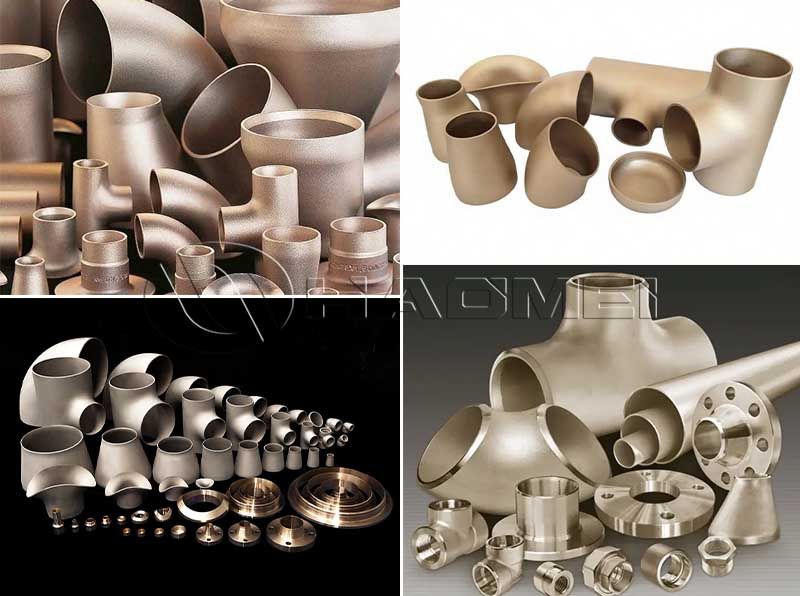
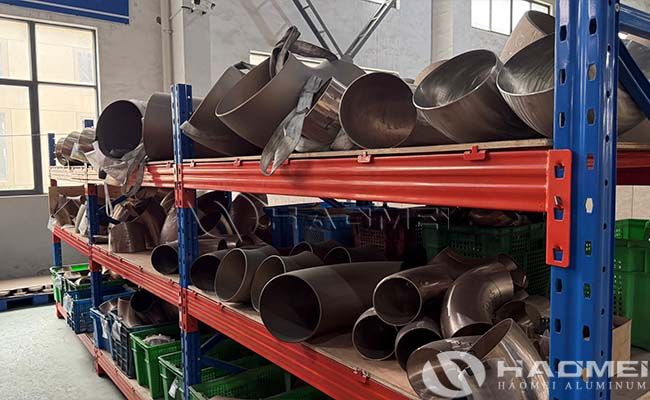
The ability to provide a comprehensive range of products and ensure responsive delivery is critical to project efficiency. Seawater piping projects typically require a variety of copper nickel pipe fittings, including elbows, tees, reducers, and flanges. A copper nickel pipe fittings supplier capable of providing a full suite of products ensures consistency in material, production batch, and technical standards, while reducing the management overhead of coordinating with multiple vendors. Suppliers that maintain a stock of standard specifications can also meet urgent delivery requirements—often within seven days—to address unexpected material shortages during a project.
As a professional copper nickel pipe fittings supplier, Haomei Aluminum possesses comprehensive production capabilities, spanning everything from raw material control to final product inspection. Our full range of 90/10 and 70/30 copper-nickel fittings strictly adheres to ASTM B466 and ASME B16.9 standards. We hold factory approvals from major classification societies and offer complete piping system solutions alongside rapid delivery services—making us a reliable partner for shipbuilding and offshore engineering projects.
 |

Haomei Aluminum CO., LTD.

|

|
Company name: Haomei Aluminum CO., LTD.. Tel : +86-18137889531 Whatsapp : +86-18137889531 E-mail : nydia@aluminumhm.com