

Copper Nickel Pipe For Offshore Platform
Offshore oil and gas platforms, wind power operation and maintenance platforms, and other marine engineering equipment operate under extreme conditions of high salt spray and complete immersion in seawater. Their seawater pipeline systems face triple failure risks: chloride ion corrosion, marine biofouling, and high-speed fluid erosion, representing a core pain point in platform operation and maintenance. Traditional carbon steel pipelines exhibit large-area corrosion and perforation within 3-5 years, while ordinary stainless steel pipelines are prone to pitting and crevice corrosion. Furthermore, both types of materials struggle to prevent pipeline blockage and heat exchange efficiency degradation caused by marine organism attachment. Copper-nickel alloy pipes, also known as cupronickel pipes, have become the standard material for seawater pipeline systems on offshore platforms worldwide due to their inherent corrosion resistance and antifouling properties, offering irreplaceable advantages in terms of life-cycle reliability and operation and maintenance costs.
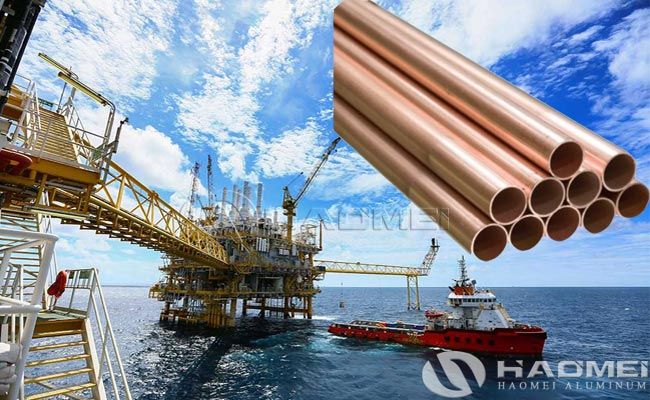
The marine environmental adaptability of copper-nickel alloys stems from their unique dual mechanisms of surface self-passivation and ion slow-release. Upon initial contact with seawater, a dense passivation film, primarily composed of cuprous oxide and bonded with nickel-iron oxide, rapidly forms on the alloy surface. This film matures and stabilizes over 2-3 months, completely blocking chloride ion penetration into the metal substrate. At normal flow rates, its annual corrosion rate is less than 0.02 mm, and its overall service life can exceed 20 years, 4-5 times that of carbon steel pipes. Simultaneously, the passivation film continuously releases trace amounts of copper ions, at concentrations far below the safe threshold for marine environments, but sufficient to inhibit the attachment and reproduction of marine microorganisms such as barnacles, mussels, and algae. It naturally possesses anti-fouling capabilities, eliminating the need for additional electrolytic antifouling devices. Even with long-term use, it maintains a smooth inner wall and stable flow diameter, preventing increased pressure drop and decreased heat exchange efficiency.
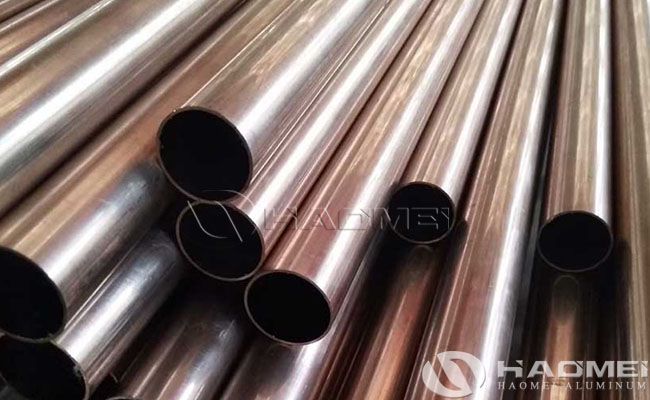
Currently, the most widely used copper-nickel pipes for offshore platforms are divided into two standard grades, corresponding to different stringent operating conditions. UNS C70600, or 90/10 copper-nickel alloy, corresponding to the national standard BFe10-1-1, is the primary choice for offshore pipelines. Its nickel content is controlled at 9.5%-10.5%, supplemented with 1.0%-1.8% iron to enhance erosion resistance, offering the best overall cost-effectiveness. This grade is suitable for seawater media with flow velocities ≤2.5m/s and is widely used in platform fire protection systems, domestic water supply and drainage, generator auxiliary cooling, and seawater desalination inlet branch pipes. It is also the most widely used pipeline material on platforms, conforming to the ASTM B466 seamless pipe and ASTM B467 welded pipe universal standards.
UNS C71500, or 70/30 copper-nickel alloy, corresponding to the national standard BFe30-1-1, has a nickel content increased to 29%-32%, significantly improving tensile strength and erosion corrosion resistance. It can withstand high-speed seawater turbulence exceeding 3m/s and has stronger resistance to pitting and stress corrosion. This grade is specifically designed for high-load core pipelines and is widely used in critical components such as main seawater cooling systems for platforms, high-pressure water supply pipes for mud pumps, seawater pipelines for flare arms, and high-pressure water injection systems in deep-sea areas. It is a core pipeline material for deep-water oil and gas platforms, and its stability under high-temperature and high-flow-rate conditions far exceeds that of the 90/10 grade.
The quality of marine grade copper-nickel pipes is highly dependent on the control of the smelting and forming processes. Our supply of copper-nickel pipes for offshore platforms is made from high-purity electrolytic raw materials through vacuum smelting, followed by hot extrusion piercing, multi-pass cold drawing, and bright annealing, resulting in a dense and defect-free structure. Before leaving the factory, finished products undergo multiple quality control processes, including eddy current testing, hydrostatic testing, and intergranular corrosion detection. We can provide third-party certifications from major classification societies such as DNV and ABS, as well as EN 10204 3.2 material certificates. We support customization of all pipe diameters and wall thicknesses to suit the pipeline layouts and on-site construction needs of various offshore platforms.
 |

Haomei Aluminum CO., LTD.

|

|
Company name: Haomei Aluminum CO., LTD.. Tel : +86-18137889531 Whatsapp : +86-18137889531 E-mail : nydia@aluminumhm.com