

Marine Aluminum Pipe For Boat Structure
Driven by the trend towards lightweight and high-performance shipbuilding, aluminum pipe for boat structures is gradually replacing traditional steel in various ship structures due to its unique material properties. As a manufacturer specializing in marine grade aluminum for shipbuilding, we optimize the material selection, specifications, and performance of our aluminum pipe for ship hull structures based on the complex operating conditions required by ships during navigation. This ensures that our products can withstand the corrosiveness of the marine environment and the impact loads during navigation.
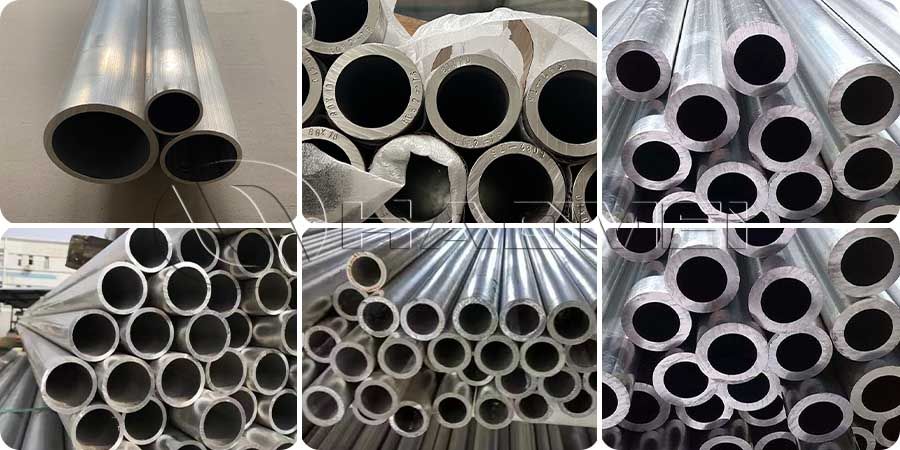
From a product specification perspective, the design of aluminum pipe for boat structures must strictly conform to the mechanical load-bearing standards of ship structures. Currently, our mass-produced core specifications cover outer diameters of 16mm-325mm, wall thicknesses of 2.5mm-20mm, and lengths can be customized according to hull section requirements (maximum single length up to 12m). The materials are mainly high-strength aluminum alloys such as 6061-T6 and 6082-T6. The 6061-T6 aluminum alloy pipes boast a tensile strength ≥310MPa, yield strength ≥276MPa, and elongation ≥10%, while the 6082-T6 material further enhances the tensile strength to ≥370MPa and the yield strength to ≥305MPa, meeting the load-bearing requirements of various hull components (such as deck supports, cabin frames, and side skeletons). All aluminum pipes we produced undergo rigorous dimensional accuracy control, with outer diameter tolerance ≤±0.5%, wall thickness tolerance ≤±5%, and straightness ≤1mm/m, ensuring precise compatibility with other hull structures.
Compared to traditional steel hull materials, aluminum pipes offer irreplaceable core advantages in marine applications. Firstly, they offer lightweight advantages. Aluminum alloy has a density of only 2.7g/cm³, approximately 38% that of steel. Using aluminum pipes for the same structural strength can reduce hull weight by 20%-30%, directly improving the ship's load-bearing ratio and speed, while also reducing fuel consumption. According to actual measurement data, every 10% increase in hull lightweighting can improve fuel efficiency by 6%-8%. Secondly, aluminum alloys exhibit excellent corrosion resistance. In marine environments, they form a dense oxide film. Combined with surface treatments such as anodizing and spraying, their resistance to salt spray corrosion far surpasses that of ordinary steel, extending the structural service life to over 15 years and significantly reducing ship maintenance costs. Furthermore, aluminum alloys possess excellent processing and forming properties. Aluminum tubes can be easily adapted to complex hull structural designs through bending and welding processes, and the strength of welded joints can reach over 85% of the base material, ensuring structural integrity.
In practical applications, aluminum pipes for ship hull structures are widely used in various types of vessels and marine engineering projects, including high-speed passenger ships, yachts, container ships, and offshore platforms. In the high-speed passenger ship sector, due to extremely high requirements for speed and maneuverability, aluminum pipes are extensively used in the main hull frame and superstructure. For example, a 40-meter high-speed passenger ship using our 6082-T6 aluminum pipes reduced its hull weight by 28% compared to a steel structure, increased its maximum speed to 35 knots, and increased its range by 12%. In yacht manufacturing, the lightweight nature of aluminum tubing allows for a lower draft, making it suitable for navigation in shallower waters. Its excellent aesthetic flexibility also allows for customized design needs. In offshore platforms, aluminum pipe is used in the platform's support structure and piping systems. Its resistance to marine corrosion and wave impact ensures stable operation in harsh marine environments.
It is important to emphasize that all our aluminum pipe for boat structures has passed certifications from authoritative international and domestic ship inspection agencies such as ABS, DNV, and CCS. Each batch of products undergoes mechanical performance testing, non-destructive testing (ultrasonic testing, eddy current testing), and corrosion performance testing to ensure product quality meets the stringent standards of the shipbuilding industry. For the individual needs of different clients, we can also provide customized specifications and surface treatment solutions to help clients optimize and upgrade their hull structures.
 |

Haomei Aluminum CO., LTD.

|

|
Company name: Haomei Aluminum CO., LTD.. Tel : +86-18137889531 Whatsapp : +86-18137889531 E-mail : nydia@aluminumhm.com