

5083 H111 Aluminum Plate for Boat Building
Within the range of 5083 marine grade aluminum tempers, H111 is specifically designed for superior formability. Unlike the H116 temper—optimized for maximum corrosion resistance—or the H321 temper—focused on weld-stress stability—the 5083-H111 aluminum utilizes a light strain-hardening process to achieve an ideal balance between structural strength and cold-working plasticity. This makes it particularly well-suited for the construction of hull sections that require extensive bending, curving, or rolling, and it is a preferred choice for hull structures above the waterline as well as superstructures.
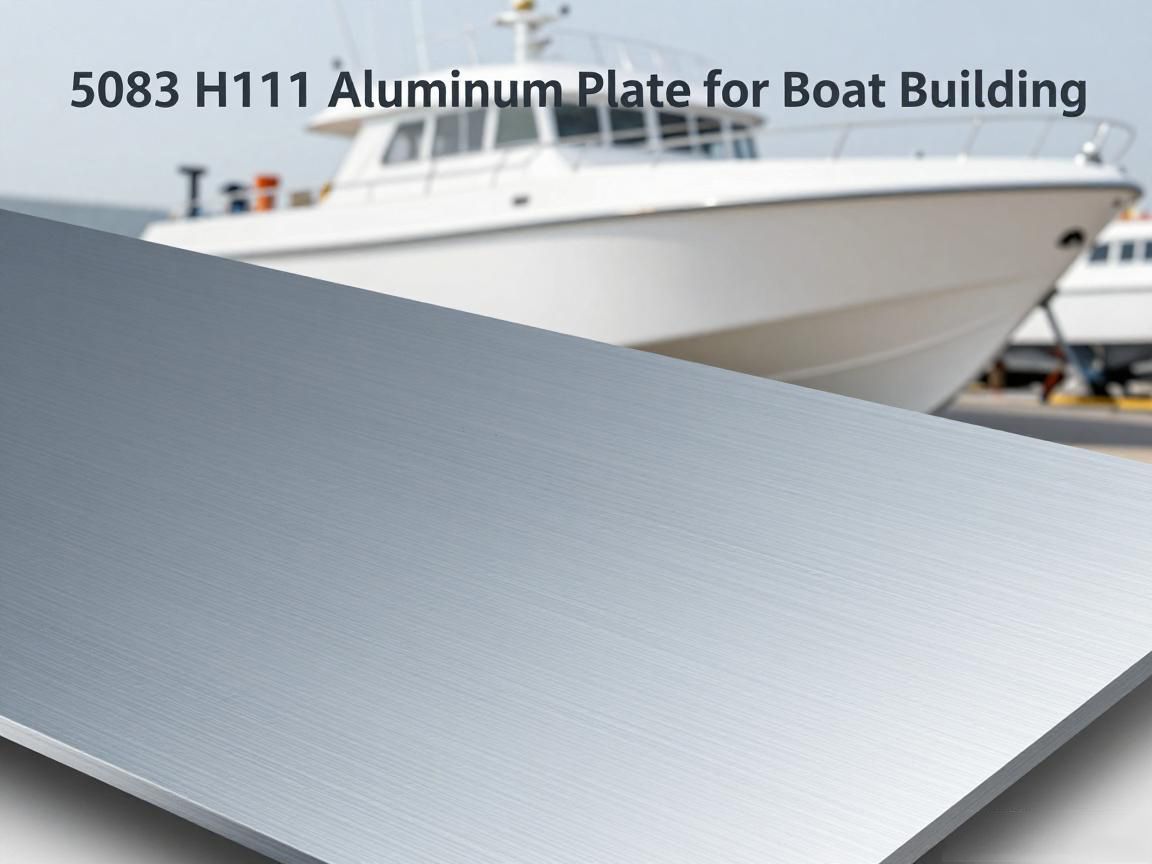
From a metallurgical perspective, 5083-H111 aluminum plates undergo only a minor degree of strain hardening during the final stages of hot rolling. By avoiding intensive subsequent cold-working, the material retains a level of plasticity comparable to that of an annealed state. The alloy composition remains the standard marine-grade 5083 aluminum-magnesium alloy, with magnesium content controlled between 4.0% and 4.9%, manganese between 0.4% and 1.0%, and chromium between 0.05% and 0.25%. Impurities such as copper, iron, and silicon are strictly limited to stay well within the maximum allowable thresholds. This compositional system ensures the material's inherent adaptability to marine environments; a dense oxide film forms spontaneously on its surface, providing stable resistance against marine salt spray and seawater splashes.
Regarding mechanical properties, in accordance with the ASTM B209 standard, 5083-H111 aluminum alloy plates with a thickness of 1.2 mm to 40 mm exhibit a tensile strength of 275–350 MPa, a yield strength (specified as stress at a specific non-proportional elongation) of at least 125 MPa, and an elongation after fracture of no less than 16%. For plates with a thickness of 40 mm to 80 mm, the tensile strength is 270–345 MPa, the yield strength is at least 115 MPa, and the elongation after fracture is no less than 14%. This strength level meets the structural requirements for non-primary load-bearing hull components. Furthermore, the high elongation provides excellent cold-bending characteristics—with a minimum cold-bending radius as small as one times the plate thickness—ensuring that the material is resistant to cracking or springback during arc-rolling and flanging processes. Based on extensive experience in supplying shipbuilding aluminum plates, the use of the H111 temper reduces the on-site processing scrap rate by approximately 12% compared to higher-strength tempers—particularly in areas requiring significant cold forming, such as curved hull sides and the complex geometries of the bow and stern—thereby effectively shortening the production cycle for shipbuilding sections.
The welding characteristics and low-temperature performance of 5083 h111 aluminum plate are also well-suited to shipbuilding requirements. When 5083-H111 is joined using MIG/TIG welding with ER5183 filler wire, it produces stable weld beads, with joint strength reaching over 85% of the base metal's strength. There is no significant embrittlement in the heat-affected zone, making it ideal for the assembly welding of hull sections. The plates also demonstrate excellent low-temperature toughness, retaining good plasticity at -40°C without the risk of cryogenic embrittlement—a range that covers the operating temperatures encountered in the vast majority of the world's maritime regions.
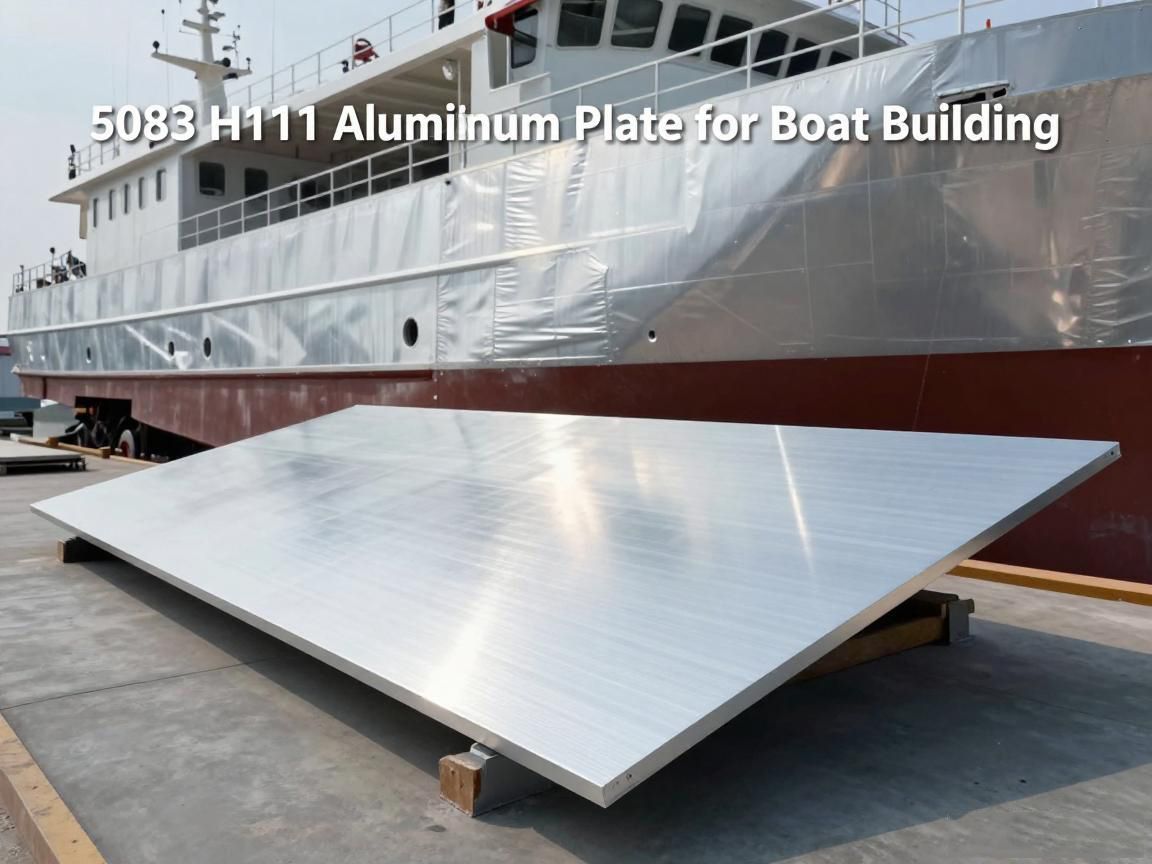
In shipbuilding, 5083-H111 aluminum plates are primarily used for hull side plating above the waterline, superstructure bulkheads, interior partition bulkheads, and the exterior walls of deckhouses. They are also widely employed for auxiliary components—such as marine fuel tanks and storage compartments—that require stamping or bending. For areas like the ship's bottom or main deck, which remain fully submerged in seawater for extended periods, H116 or H321 temper variants are recommended to provide superior resistance to exfoliation corrosion.
Haomei Aluminum produces 5083-H111 aluminum plate for boat building in thicknesses ranging from 2mm to 80mm, with a maximum width of up to 2600mm. We offer services such as cutting to specific lengths and custom sizing based on modular ship-section dimensions. Our facility conducts rigorous, end-to-end sampling of chemical composition and mechanical properties, ensuring flat surfaces and consistent dimensional tolerances. We can provide certification from classification societies—including CCS, DNV, and ABS—along with EN 10204 material certificates. With a steady inventory of standard marine-grade specifications, we are well-positioned to meet both bulk supply requirements and replenishment needs for shipbuilding projects, providing clients with reliable, formable aluminum solutions and predictable delivery timelines.
 |

Haomei Aluminum CO., LTD.

|

|
Company name: Haomei Aluminum CO., LTD.. Tel : +86-18137889531 Whatsapp : +86-18137889531 E-mail : nydia@aluminumhm.com