

H111 Aluminium In Shipbuilding
H111 aluminium typically refer to aluminum alloys that have undergone heat treatment followed by light machining. They possess good mechanical properties and plasticity, making them suitable for further processing. H111 temper aluminum alloys are generally from the 5000 series, such as 5083, 5086 and 5754. With its core advantages of "resistance to marine corrosion + lightweight + strong machinability," H111 temper aluminum alloys have become a commonly used material choice in the shipbuilding industry.
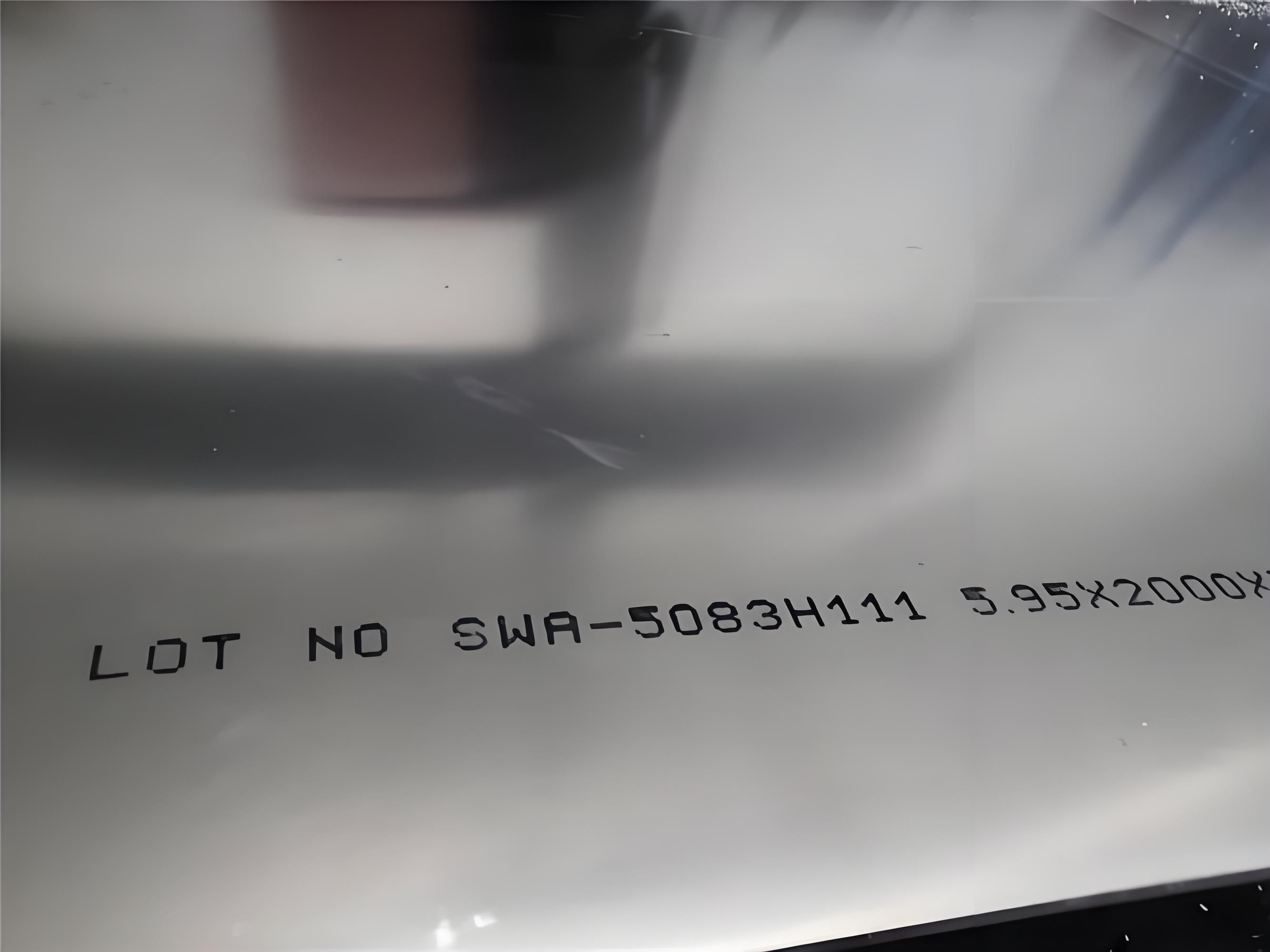
Why does h111 aluminium can be applied to shipbuilding industry?
1. Marine-grade corrosion resistance, suitable for harsh service environments
5000 series marine grade aluminum alloy uses magnesium as the main alloying element (magnesium content 2.2%-4.5%), forming a magnesium-aluminum alloy phase with extremely strong corrosion resistance:
Its surface easily forms a dense and stable Al-Mg composite oxide film, effectively isolating it from seawater, salt spray, and tidal erosion, eliminating typical marine corrosion problems such as pitting and crevice corrosion, resulting in a service life 1.5-2 times that of ordinary pure aluminum;
It has strong resistance to marine organism adhesion and industrial salt spray pollution, eliminating the need for frequent anti-corrosion coating maintenance, reducing subsequent maintenance costs by more than 60% compared to steel materials;
It has excellent resistance to stress corrosion cracking (SCC), making it particularly suitable for parts of ships such as decks, side plating, and underwater support structures that are subjected to the combined effects of alternating stress and corrosive media over long periods.
2. Balance of lightweight design and strength, reducing operating costs
With a density of only 2.68-2.70 g/cm³, approximately one-third that of steel, using 5000 series H111 aluminum can reduce a ship's weight by 20%-30% while maintaining the same structural strength:
Merchant/Cargo Ships: A ton reduction in weight can save 500-800 liters of fuel annually. Based on an average annual sailing time of 8000 hours, this translates to annual fuel savings exceeding 10,000 yuan per ship.
Yachts/High-Speed Passenger Ships: Lightweight design can increase speed by 5%-10%, enhancing maneuverability while reducing power system load and extending engine life.
Tensile strength reaches 150-280 MPa (depending on the model, e.g., 5083 H111 aluminum with a tensile strength ≥270MPa), far exceeding that of pure aluminum, and through reasonable structural design (such as profile splicing and reinforcing rib layout), it can meet the strength requirements of semi-load-bearing structures such as decks, railings, and hull shells, balancing safety and lightweight design.
3. Excellent processing and welding performance, adaptable to shipbuilding processes.
The H111 annealed state gives the material high ductility (elongation ≥20%), allowing it to be processed into complex shapes through various processes such as rolling, bending, stamping, and stretching, such as curved hull plates, pipe elbows, and irregularly shaped interior parts, without the risk of brittle fracture, adapting to the diverse processing needs of ship section manufacturing;
It has extremely strong welding compatibility, and can be used with conventional shipbuilding welding processes such as argon arc welding, gas shielded welding, and resistance welding. The weld strength can reach more than 85% of the base material, requiring no complex heat treatment after welding, with minimal post-weld deformation, efficiently adapting to the process flow of on-site ship assembly and section splicing, improving shipbuilding efficiency by more than 30%.
4. Non-magnetic + low maintenance, suitable for special scenarios
5000 series aluminum is a non-magnetic material, which will not interfere with the operation of precision instruments such as ship navigation radar, compasses, and communication equipment. It is particularly suitable for military auxiliary vessels, research vessels, and survey vessels—ships sensitive to electromagnetic environments.
Its smooth surface makes it difficult for marine organisms (such as shellfish and algae) to adhere, reducing hull drag and lowering the frequency of underwater cleaning (compared to steel hulls, cleaning cycles can be extended to 6-12 months), while reducing cleaning costs by more than 50%.
5. Excellent fatigue resistance and low-temperature performance, ensuring navigational safety
The magnesium element in 5000 series aluminum alloys optimizes the alloy's grain structure, resulting in a fatigue strength of 80-120 MPa. This allows it to withstand alternating loads from wave impacts and hull vibrations during ship navigation, and it is less prone to fatigue cracking over long-term use.
It also exhibits outstanding low-temperature toughness, maintaining stable impact toughness (5083-H111 low-temperature impact energy ≥40J) in extreme marine temperature environments ranging from -40℃ to 60℃, with no risk of low-temperature embrittlement. This makes it suitable for the needs of polar research vessels and high-latitude navigation vessels.
6. High environmental and recycling value, aligning with industry trends
Aluminum recycling rate exceeds 95%, with recycling energy consumption only 5% of that used in primary aluminum production. After a ship is scrapped, 5000 series H111 aluminum components can be 100% recycled and reused, resulting in high resource recycling value and reducing carbon emissions throughout the ship's lifecycle.
In line with the International Maritime Organization (IMO)'s new low-carbon emission reduction regulations, lightweight ships built using 5-series aluminum can reduce carbon emissions from fuel consumption, enhance the market competitiveness of ship products, and help shipbuilders meet green shipbuilding standards.
The core advantages of 5000 series H111 aluminum lie in its "strong resistance to marine corrosion, a balance between strength and lightweight, good adaptability to processing and welding, and low maintenance costs," perfectly matching the shipbuilding industry's core demands of "resistance to harsh environments, reduced operating costs, improved production efficiency, and adherence to safety standards." Therefore, it is widely used in key components such as ship decks, side plating, underwater structures, piping systems, and interior components, becoming the preferred material for mid-to-high-end merchant ships, yachts, and research vessels.
 |

Haomei Aluminum CO., LTD.

|

|
Company name: Haomei Aluminum CO., LTD.. Tel : +86-18137889531 Whatsapp : +86-18137889531 E-mail : nydia@aluminumhm.com