

5083 H321 Marine Grade Aluminum Plate
In shipbuilding, material selection directly determines a ship's durability, economy, and environmental performance. As an marine grade aluminum manufacturer deeply involved in aluminum alloy R&D, our 5083 H321 marine grade aluminum plate, with its unique alloy design and optimized processes, has become the preferred material for high-end shipbuilders worldwide. 5083 marine aluminum plate is widely used in structural components in ships, marine engineering, and other harsh environments. This product not only meets the stringent certification standards of international classification societies (CCS, ABS, DNV, BV, etc.), but also achieves a breakthrough balance in the three core properties of strength, corrosion resistance, and machinability.
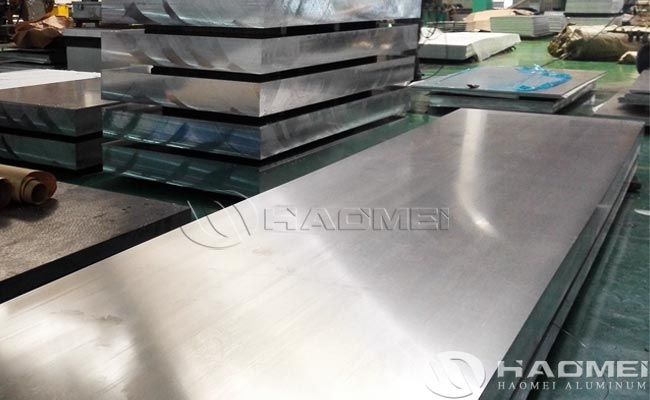
The performance advantages of 5083 H321 marine grade aluminum plate begin with the rigorous proportions of every element. We precisely control the magnesium content within the golden range of 4.0%-4.9%. This core strengthening element, along with 0.40%-1.0% manganese and 0.05%-0.25% chromium, creates a synergistic effect. This avoids the detrimental effects of impurities such as copper and zinc on corrosion resistance (Cu≤0.1%, Zn≤0.25%), while also improving the material's toughness by refining the recrystallized structure. This compositional design allows the marine grade 5083 aluminum plate, after H321 stabilization treatment, to achieve a balance between "uncompromised strength and undiminished plasticity"—tensile strength reaches 305-385 MPa, yield strength remains stable above 215 MPa, and elongation maintains an excellent level of 12%, far exceeding the mechanical properties of ordinary marine aluminum materials, ensuring the rigidity of the hull structure under the impact of wind and waves. This combination endows the material with two major properties:
300% improved corrosion resistance: In salt spray tests simulating marine environments, the corrosion rate of 5083 H321 is only 1/5 that of ordinary steel, and the surface oxide film thickness can reach over 15μm, effectively blocking chloride ion corrosion.
Breakthrough in fatigue strength: By adding 0.05%-0.25% chromium through microalloying technology, the grain boundary strengthening effect is significant. After 10^7 cycles of load testing, the fatigue limit remains above 210MPa, far exceeding similar products.
Chloride ion corrosion is the "enemy" of marine materials, and 5083 H321 marine grade aluminum plate has already prepared a solution to this problem. Its naturally formed dense oxide film effectively blocks seawater penetration. Authoritative testing shows no pitting corrosion in a 5000-hour salt spray test, and the corrosion amount in a seawater environment over 20 years is less than 1mm. Compared to the commonly used 5052 aluminum alloy, its corrosion resistance lasts 40% longer. Even when used on long-term immersion areas such as ship hull plating and decks, frequent anti-corrosion coatings are unnecessary, reducing ship maintenance costs and avoiding the marine pollution risks associated with coating peeling. More importantly, in polar navigation scenarios, its impact toughness remains at 25 J/cm² at -196℃ liquid nitrogen temperatures, only 15% lower than at room temperature, making it perfectly suited for the extreme low-temperature conditions of LNG carriers and polar research vessels.
For shipyards, the material's processability directly impacts the shipbuilding cycle. 5083 H321 marine grade aluminum plate supports multiple mainstream welding methods such as TIG, MIG, and FSW. When welded with 5356 welding wire, the weld coefficient can reach 0.95, and the post-weld strength retention rate exceeds 90%, completely solving the pain point of "easy weld cracking" in large hull splicing. Utilizing our six-roll cold rolling mill technology, we can produce ultra-wide aluminum plates with thicknesses ranging from 3-50mm and widths up to 2650mm. Custom cutting can be tailored to meet specific hull structural requirements, reducing the number of weld seams and improving construction efficiency. Simultaneously, its excellent cold working properties allow for the one-step stamping and bending of complex curved components, easily meeting dimensional tolerance requirements for high-precision components such as yacht bulkheads and engine mounts.
As an export-focused manufacturer, we understand that certification is the "stepping stone" for products to reach the global market. Currently, our 5083 H321 marine aluminum sheets have passed numerous authoritative international certifications, including CCS (China Classification Society), ABS (American Bureau of Shipping), DNV (Det Norske Veritas), BV (British Register of Shipping), and LR (London Detachment of Shipping). From chemical composition to mechanical properties, each batch of products has a complete test report, fully complying with standards and ensuring unimpeded access to major global shipbuilding markets in Europe, America, and Southeast Asia.
As shipbuilders strive for "lighter, stronger, and more durable" materials, 5083 H321 marine grade aluminum plates safeguard every voyage with their stable performance, from the high temperatures and humidity of tropical seas to the frigid cold of the polar regions. We firmly believe that good marine materials must not only meet technical specifications but also align with the shipyard's actual needs—this is the core principle behind our years of meticulous craftsmanship, and we look forward to embarking on the deep blue seas with your shipbuilding projects.
 |

Haomei Aluminum CO., LTD.

|

|
Company name: Haomei Aluminum CO., LTD.. Tel : +86-18137889531 Whatsapp : +86-18137889531 E-mail : nydia@aluminumhm.com