

5059 Aluminum Plate For Marine Use
5059 aluminum plate is perfectly suited for marine use and is one of the preferred grades of aluminum for high corrosion resistance in shipbuilding applications. The core reason lies in its aluminum-magnesium alloy composition, with a magnesium content ranging from 4.7% to 5.7%, and the addition of trace amounts of manganese and chromium. This combination provides excellent corrosion resistance in marine environments while maintaining the mechanical properties required for ship structures, simultaneously meeting the core requirements of lightweight construction, corrosion resistance, and ease of processing.
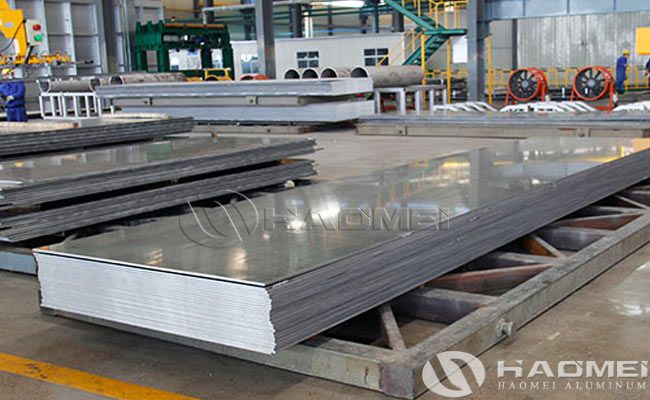
Core advantages of 5059 aluminum plate for marine use:
- Extremely strong marine corrosion resistance
This is its core advantage for shipbuilding applications. 5059 aluminum plate exhibits significantly higher resistance to pitting and crevice corrosion than ordinary grades like 5052 and 5083 aluminum plate. In salt spray and high-humidity marine environments, it rapidly forms a dense and stable oxide film on its surface, effectively preventing chloride ion corrosion. Practical application verification shows that its corrosion rate during the ship's service life is far lower than that of carbon steel, significantly reducing maintenance costs and extending the hull's service life.
- High specific strength, balancing lightweight and structural stability
5059 aluminum plate boasts a tensile strength of 290-350 MPa and a yield strength of approximately 210 MPa, meeting the load-bearing requirements of ship decks, sides, and other structural components. Simultaneously, its density is only 2.68 g/cm³, about one-third that of steel. Using 5059 aluminum plate to replace traditional steel can significantly reduce hull weight, improving a ship's carrying capacity, speed, and fuel economy—crucial for commercial vessels prioritizing operational efficiency and specialized vessels emphasizing maneuverability.
- Excellent processing and welding performance
5059 marine grade aluminum plate exhibits excellent plasticity, allowing it to be processed into complex hull components through bending, stamping, and roll bending, adapting to the manufacturing requirements of curved ship structures. Its weldability is excellent; reliable connections can be achieved using conventional processes such as argon arc welding. The strength and corrosion resistance of the welded joint are essentially the same as the base material, with no significant performance degradation due to welding, facilitating the segmented construction and assembly of ships.
- Non-magnetic and low-temperature resistant, suitable for special shipboard scenarios
5059 aluminum plate is a non-magnetic material that will not interfere with the ship's magnetic compass and other navigation equipment, making it suitable for research vessels, military vessels, and other ship types with electromagnetic compatibility requirements. Simultaneously, its excellent low-temperature toughness prevents brittle fracture in low-temperature environments such as polar seas, broadening the ship's operational range.
Specific applications of marine grade 5059 aluminum plate on ships:
- Superstructure:
Including components such as the bridge, engine room canopy, masts, and railings. These parts have high requirements for corrosion resistance and lightweighting. 5059 aluminum plate can effectively reduce the weight of the superstructure, lower the ship's center of gravity, improve the ship's stability, and prevent corrosion of the superstructure by the marine atmosphere.
- Ship deck and platforms:
Suitable for open decks, passageway platforms, equipment installation platforms, and other areas. The high strength of 5059 aluminum plate can withstand the loads of personnel and equipment, its corrosion resistance can withstand long-term immersion in deck water (containing chloride ions), and the anti-slip treatment of the aluminum plate surface ensures the safety of personnel walking.
- Side structures and cabin bulkheads
Can be used for side plating (especially above the waterline), and for partitions and linings in internal cabins. This reduces the overall weight of the hull, adapts well to curved side designs through excellent formability, and isolates internal equipment from seawater corrosion.
- Specialty vessel functional components
Installation brackets for detection equipment on research vessels and monitoring vessels: Utilizing its non-magnetic properties to avoid interfering with the accuracy of detection instruments;
Pipeline system cladding and valve protective covers for near-shore operations vessels: Extending pipeline lifespan through corrosion resistance;
Hydraulic hulls for high-speed boats: High specific strength supports the high-speed navigation requirements of speedboats while reducing energy consumption.
The performance advantages of 5059 aluminum plate make it widely used in mid-to-high-end shipbuilding, especially suitable for commercial vessels and special-purpose vessels operating in coastal and deep-sea environments. In contrast, ordinary vessels may use grades such as 5083 aluminum plate if cost control is strict, but 5059 aluminum plate has a more prominent advantage in corrosion resistance and overall performance.
 |

Haomei Aluminum CO., LTD.

|

|
Company name: Haomei Aluminum CO., LTD.. Tel : +86-18137889531 Whatsapp : +86-18137889531 E-mail : nydia@aluminumhm.com